

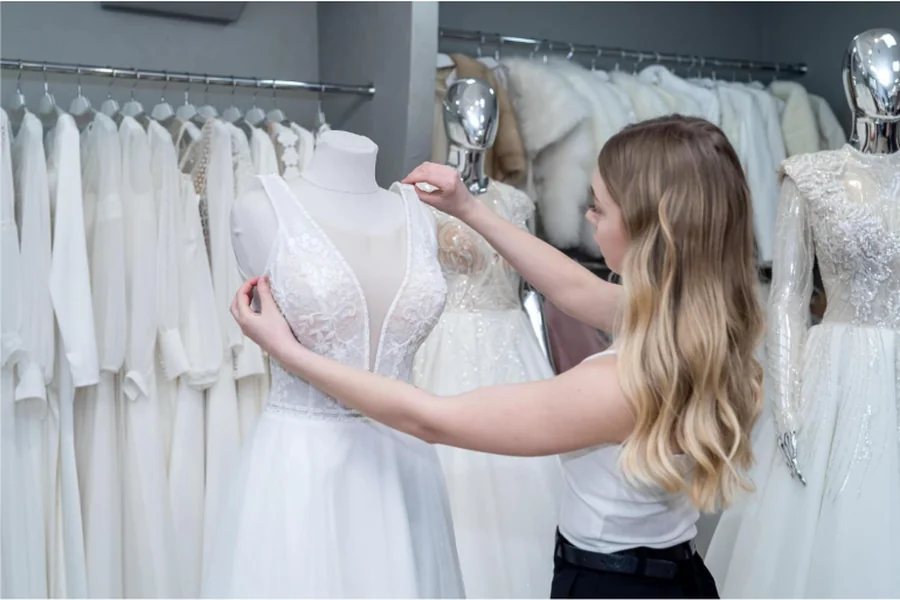
Choosing a wedding dress is one of the most exciting moments in the wedding planning process, but it can also turn into one of the most complex decisions to make. It’s not just about finding a beautiful gown: it’s a choice that should reflect personality, suit the body, align with the event’s style and, above all, make the bride feel comfortable.
For those already planning their wedding, the questions are often the same: when to begin the search? How to determine the right style? Is it better to follow trends or trust one’s instincts?
Let’s go over the key elements to consider in order to make this decision mindfully, avoiding stress and disappointment.
When to start looking for the dress
Timing is important. Generally, it’s recommended to start looking for the wedding dress about 9–12 months before the wedding date. This timeframe allows for fittings, ordering the gown if necessary, making alterations and receiving it without the last-minute panic.
If opting for a ready-to-wear dress, the timeline can be shorter, but it’s still a good idea to start early so you can explore more options. Brides getting married abroad should also take into account the time needed for transporting the dress and any travel-related complications.
Define the wedding style before the dress
Before stepping into a bridal boutique, it’s helpful to have a clear idea of the event’s style. Will it be an elegant ceremony in a castle, an intimate party at a countryside venue or a celebration on the beach?
The wedding dress should reflect the tone of the day. A fairytale gown with a full skirt and long train might be perfect for a historic villa, but could be uncomfortable at a rustic or outdoor wedding. For more informal or boho chic settings, lightweight fabrics like chiffon or lace are often a winning choice.
Thinking ahead about the context helps eliminate unsuitable options and guides the choice toward dresses that fit the overall vibe of the special day.
Understanding one’s silhouette and enhancing it
Every body is unique and a well-chosen wedding dress should enhance it naturally and without compromise. At this stage, the guidance of an experienced consultant is essential for helping the bride identify the cuts and volumes that make her feel more confident and at ease.
For example, mermaid dresses highlight curves; empire-line gowns are perfect for elongating the figure or for those who prefer to avoid a tightly defined waist; voluminous skirts suit a variety of body types and offer a romantic touch.
There is no universally perfect model, only the right one for each individual. Trying on different styles with an open mind, without being overly influenced by current trends, often leads to unexpected and satisfying discoveries.
The importance of fabric
The impact of fabric on fit, comfort and visual effect is often underestimated. Stiffer fabrics like mikado or taffeta create more structured and formal shapes, while softer materials such as georgette or organza offer fluidity and a lighter feel.
Summer weddings or warm destinations call for breathable, lightweight fabrics. In contrast, a winter celebration may allow for richer materials or velvet accents.
A factor not to be overlooked, especially for destination weddings, is the fabric’s resilience during transport. Some materials wrinkle easily, while others travel better and can be folded into luggage without damage.
Getting married abroad
For those who choose to marry abroad, it’s essential to carefully consider the logistics of transporting the dress. Wrinkles, delays and minor incidents are always possible.
An experienced wedding planner specializing in international weddings can be extremely helpful. Not only can they offer advice on how to pack the dress for a flight, but they often have trusted contacts with local dry cleaners or seamstresses to assist with last-minute adjustments, such as repairing seams or fixing a faulty zipper.
For instance, in Italy, emozioni-wedding.it/en handles these practical aspects as well, helping American brides avoid unnecessary stress over minor but impactful details.
Staying within budget
While the wedding dress holds strong symbolic value, staying grounded in the available budget is essential. Setting a clear spending limit before beginning the search helps avoid disappointment and wasted time.
It’s also important to remember that the cost of the gown doesn’t include just the dress itself. Tailoring, accessories, shoes, the veil and lingerie all need to be factored in. It’s wise to ask in advance what is included in the price and what isn’t.
Excellent alternatives exist beyond high-end boutiques: independent shops, prêt-à-porter collections and even second-hand dresses, often preserved in perfect condition and with their own unique charm.
The role of emotions without pressure
When trying on “the right dress,” many brides describe an immediate emotional response like a spark. But that doesn’t always happen. Not every bride tears up or feels overwhelmed, and that doesn’t mean the right dress hasn’t been found.
It’s important not to be influenced by movies, social media or the expectations of companions. The right gown is the one that feels true to the wearer, one that doesn’t require constant adjusting, allows free movement and breathing, and brings out a genuine smile.
Making conscious decisions based on comfort and authenticity is the best way to enjoy the wedding day with ease and joy.
Trusting instinct
In a world overflowing with options, from magazines to Instagram, Pinterest and fashion shows, it’s easy to lose sight of what truly resonates. A helpful tip: collect ideas, yes, but without becoming dependent on online models.
After a few fittings, it becomes clearer which styles flatter the body and create a sense of ease. At that point, trusting instinct can lead to a joyful and lasting choice.
The wedding day will be filled with emotion, and the dress is just one of many elements that will make it memorable. But when carefully chosen, it can make each moment even more special, without overshadowing the most important part of all: the love being celebrated.
