

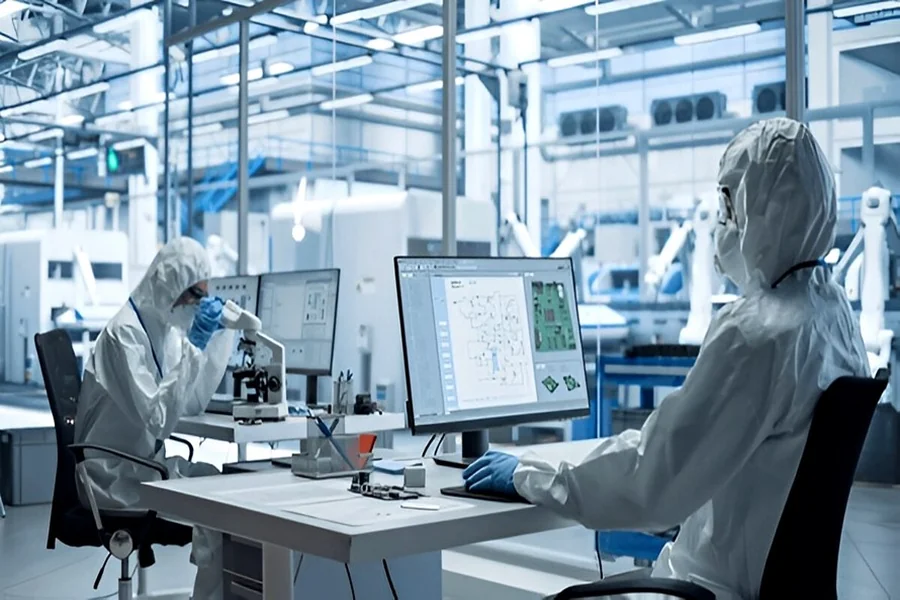
A High Speed PCB is a specialized printed circuit board designed for circuits that operate at high frequencies, typically above 100 MHz. These PCBs are engineered to manage fast signal transmission with minimal loss, interference, or distortion. As electronic devices continue to evolve, High Speed PCBs have become crucial for applications requiring precise signal integrity and rapid data processing.
From telecommunications and computing to aerospace and medical devices, High Speed PCBs enable reliable, high-performance operation. The boards must accommodate fast-switching signals while minimizing issues like crosstalk, reflection, and electromagnetic interference.
Why High-Speed PCBs Are Important
The increasing demand for faster, more reliable electronic devices has made High Speed PCBs a critical component in modern technology. Key benefits include:
- Signal Integrity: High Speed PCBs are designed to maintain clean signals, even at high frequencies.
- Reduced Crosstalk: Proper layout and design techniques minimize interference between traces.
- Controlled Impedance: Ensures consistent performance for sensitive high-speed signals.
- Thermal Management: High-speed circuits generate heat, and these PCBs help dissipate it efficiently.
- Support for Complex Devices: Essential for advanced computing, networking equipment, and communication devices.
By addressing these challenges, High Speed PCBs enable faster processing, enhanced connectivity, and reliable operation in demanding applications.
Applications of High- Speed PCBs
High Speed PCBs are widely used across industries that demand high-frequency performance and precision:
- Telecommunications: Routers, switches, and high-speed data communication devices rely on these boards.
- Computing Devices: Servers, data centers, and high-performance computing systems utilize High Speed PCBs for faster data transfer.
- Aerospace and Defense: Radar systems, avionics, and defense electronics require reliable high-speed boards.
- Medical Equipment: Imaging devices, monitoring systems, and diagnostic tools benefit from accurate high-frequency performance.
- Consumer Electronics: Smartphones, tablets, and gaming systems leverage High Speed PCB technology for enhanced speed and performance.
These applications demonstrate how High Speed PCBs are essential for devices requiring rapid and reliable signal transmission.
Key Features of High-Speed PCBs
To deliver superior performance, a High Speed PCB must include specific design and manufacturing features:
- Low-Loss Materials: High-quality substrates like Rogers or PTFE reduce signal attenuation.
- Controlled Impedance: Maintains consistent signal characteristics throughout the PCB.
- Precise Trace Layout: Ensures minimal signal reflection and crosstalk.
- High-Frequency Capability: Designed to support GHz-level signal frequencies.
- Thermal Management: Effective heat dissipation for sustained high-speed operation.
These features make High Speed PCBs ideal for high-frequency and high-performance applications where accuracy and reliability are critical.
Challenges in Designing High Speed PCBs
Designing a High-Speed PCB comes with unique challenges:
- Signal Loss: High-frequency signals are prone to attenuation, requiring careful material selection.
- Electromagnetic Interference (EMI): Fast signals can radiate EMI, which must be controlled through shielding and layout.
- Impedance Control: Critical for maintaining consistent signal behavior across the board.
- Miniaturization: High-speed devices often demand compact PCBs without compromising performance.
Addressing these challenges requires advanced design software, precision manufacturing, and rigorous testing to ensure the PCB meets demanding specifications.
The Future of High-Speed PCBs
As electronic devices continue to evolve, the role of High-Speed PCBs will expand. Emerging technologies like 5G, IoT, artificial intelligence, and high-frequency radar systems demand boards capable of handling faster data rates and higher frequencies.
Future trends include:
- Advanced Materials: Development of low-loss, high-performance substrates for ultra-high-speed applications.
- High-Density Interconnects: Stacked and microvia technology for miniaturized, multi-layer boards.
- Enhanced Thermal Solutions: Improved cooling techniques to handle power-intensive circuits.
- Integration with Next-Gen Components: Supporting fine-pitch ICs, high-speed connectors, and RF modules.
The continuous demand for faster, smaller, and more reliable electronics ensures that High Speed PCBs will remain a cornerstone of technological innovation.
Conclusion
A High-Speed PCB is essential for any application that requires rapid, reliable, and precise signal transmission. By ensuring signal integrity, controlling interference, and supporting high-frequency operations, these boards enable cutting-edge performance in telecommunications, computing, aerospace, medical, and consumer electronics.
Partnering with a trusted High Speed PCB Manufacturer ensures access to advanced materials, precise manufacturing, and expert design capabilities. With the right manufacturer, businesses can create high-speed solutions that meet the demanding needs of today’s technology-driven world.
